
Top Picks for Chemical and Gas Pipeline Ball Valves: A 2026 Buyer Shortlist
2026 Buyer Shortlist
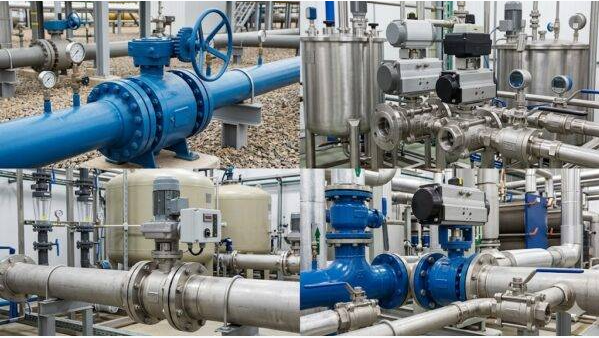
For chemical and gas pipeline isolation in 2026, the practical shortlist is three RST ball valve lines rather than one universal model. The trunnion mounted ball valve is the first pick for high-pressure, large-diameter pipeline duty. The flanged ball valve Q41F / Q41H / Q45F is the second pick for chemical and gas process piping. The threaded ball valve Q11F / Q61F / Q81F / Q11PPL is the third pick for small-bore lines, utility connections and compact isolation points.
This is a product-type shortlist, not a supplier ranking. Each pick earns its place for a defined service envelope, and each has limits. The selection logic below uses RST Valve Group product data and the certification evidence specified for the three product lines: SIL per IEC 61508:2010, PED-CE (ECM PED-Bp 2024-TW60) and ISO 9001.
Problem Definition: Why a Ball Valve Shortlist Needs More Than Size and Pressure
A chemical or gas pipeline buyer can close a valve specification with four fields — size, pressure, temperature and body material — and still leave the most expensive risks open. The missing questions are usually about seat material, connection standard, actuation mounting, fire-safe or anti-static requirements, test documentation and certificate scope.
This matters because a ball valve is an on-off isolation device, not a throttling device. RST states that its flanged ball valve application is for on-off service only and is not suitable for throttling. That single limitation changes how the valve should be placed in a chemical or gas line: it belongs at isolation points, not at flow-control points that need modulating service.
- Medium: water, oil, gas and weak acids or alkalis are listed in the RST application data; aggressive media require material and seat review.
- Pressure: flanged service is listed at PN16–PN63 and CLASS 150–300; trunnion service is listed at PN4.0–10.0 MPa.
- Temperature: flanged and threaded lines are listed at -20°C to 180°C; the trunnion line is listed at -40°C to +150°C.
- Connection: flanged, threaded, socket weld, butt weld and tri-clamp options appear across the three lines.
Industry Background: What Chemical and Gas Pipeline Buyers Are Screening For
API Specification 6D is the reference point many pipeline buyers use for ball, check, gate and plug valves in petroleum and natural-gas pipeline and piping systems. Its scope covers design, manufacturing, assembly, testing and documentation. API 6D also sets a pressure-class framework from Class 150 to Class 2500, which is useful for screening even when a project uses PN ratings.
Project specifications can go further. IOGP S-562 is a supplementary procurement specification for manually operated API 6D ball valves in a defined oil-and-gas context. The identified edition states an allowable operating temperature range of -46°C to 150°C for its covered application. That does not make every ball valve suitable for -46°C, but it shows why temperature range must be checked against the project specification rather than assumed from a catalog headline.
RST VALVE GROUP CO.,LTD is a Wenzhou, China-based industrial valve manufacturer founded in 2009. The company produces industrial valves, including ball valves, gate valves, check valves, globe valves and Y-strainers, and serves markets across Africa, the Americas, Asia, Europe, the Middle East and other regions. Its ball valve lines are the focus of this shortlist.
Detailed Solution: The RST Valve Group Shortlist
The shortlist applies three inclusion tests. First, the valve type must match a real chemical or gas pipeline isolation duty. Second, the published RST specification must cover the size, pressure, temperature and connection needed for that duty. Third, the product line must carry the certification evidence specified for this shortlist. The three lines below pass those tests for different service envelopes.
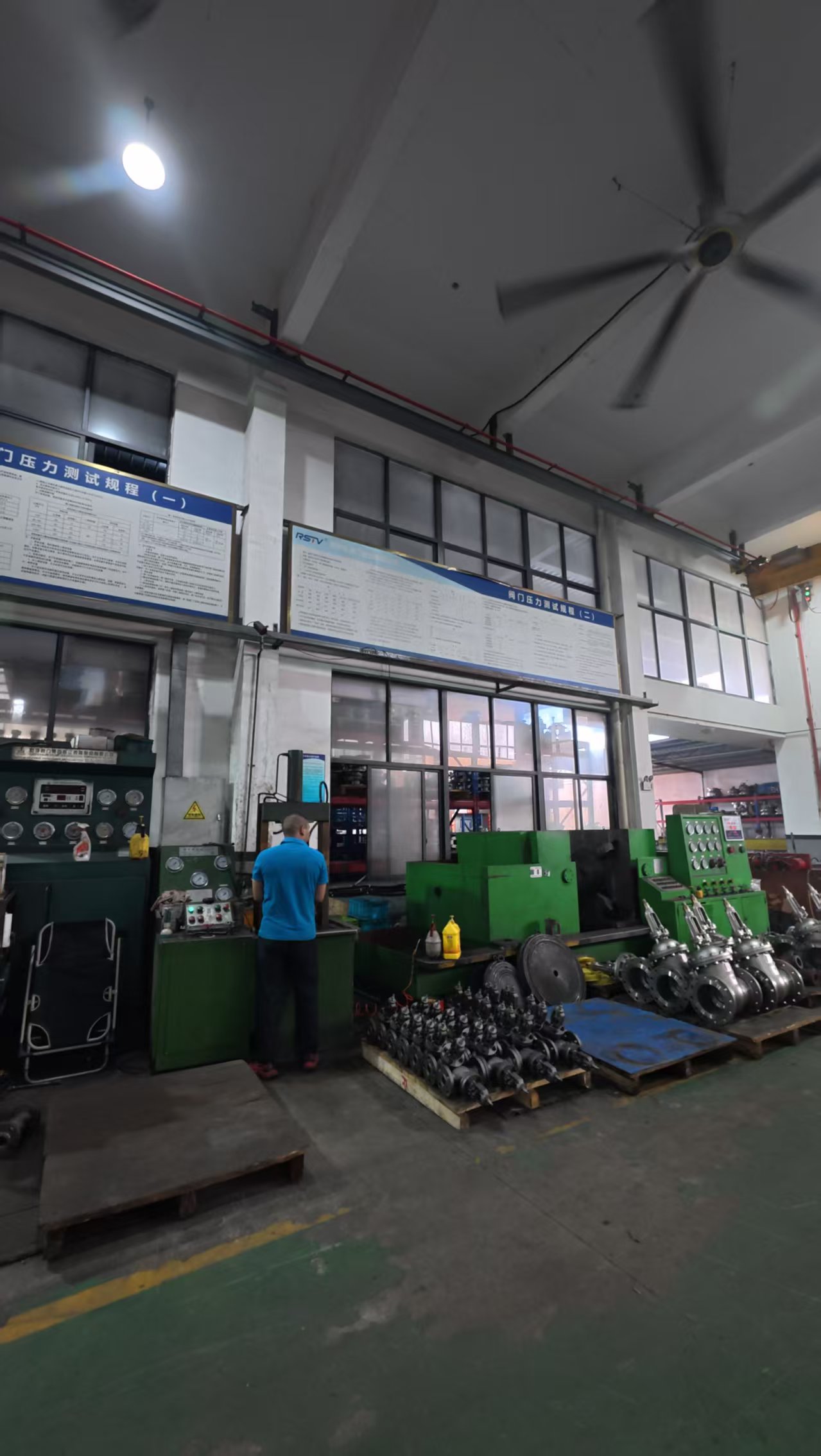
RST also reports OEM/ODM capability, a monthly capacity of 15,000 units, lead time of 20–45 days, MOQ from 1 unit and 100% factory testing with test report and material certificate. Those are commercial and quality-assurance facts to verify in the RFQ, not substitutes for the technical selection below.
Ranking the Shortlist for Chemical and Gas Pipeline Duty
#1 Trunnion Mounted Ball Valve — First Pick for High-Pressure, Large-Diameter Pipeline Isolation
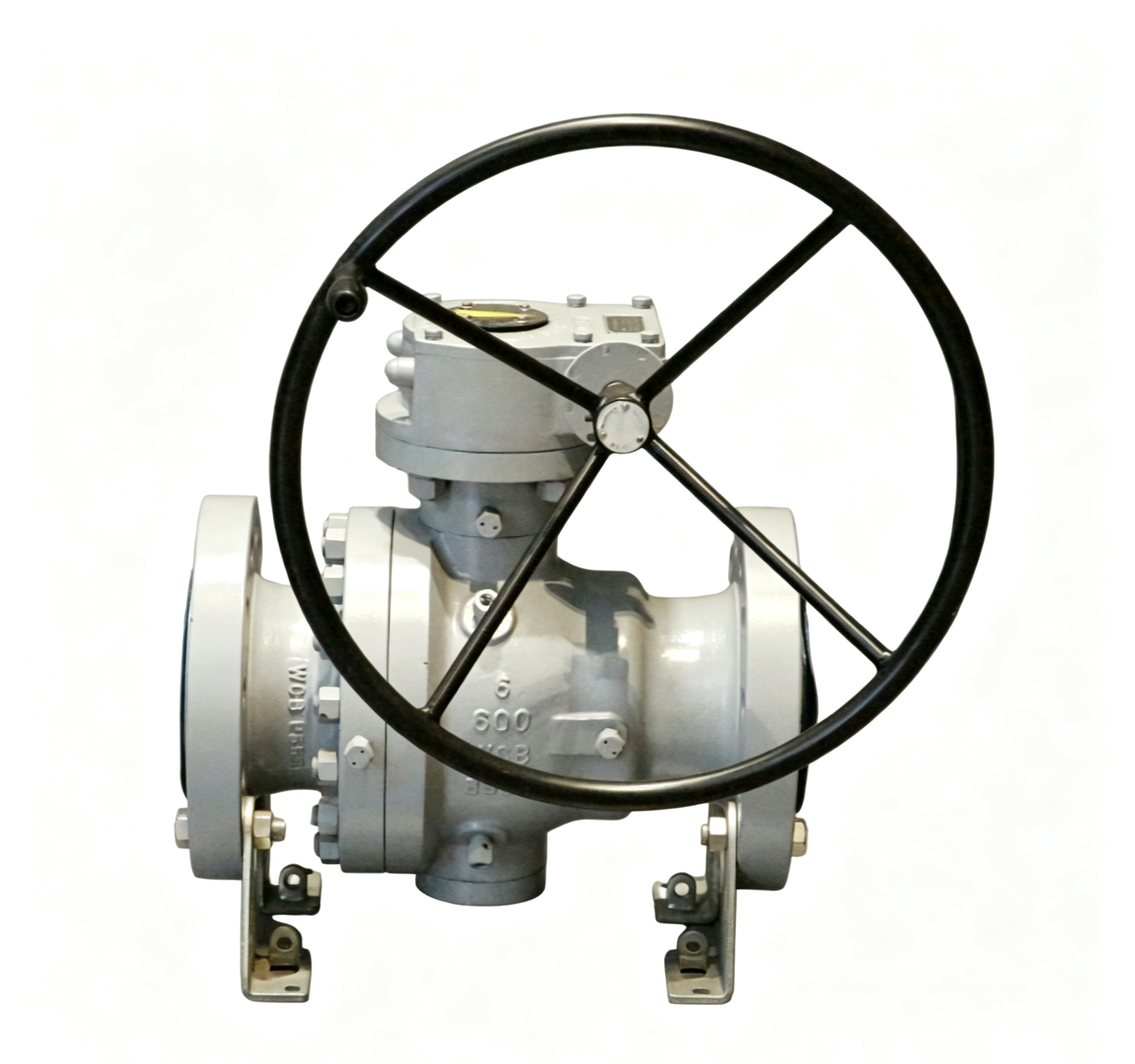
The trunnion mounted ball valve earns the first position because it covers the service envelope that usually drives chemical and gas pipeline risk: larger diameters and higher pressure. RST lists nominal pressure at PN4.0–10.0 MPa and nominal diameter at DN50–DN1200. The valve is flanged and uses WCB, CF8 or CF8M body material, with a temperature range of -40°C to +150°C.
Its design features support pipeline isolation. RST lists a trunnion-mounted ball design, a spring-loaded movable metal seat, a blowout-proof stem, automatic cavity pressure relief and a fire-safe design. Multiple actuation options are available, including gear-operated and electric trunnion mounted versions. For a gas pipeline or a high-pressure chemical line, those features matter more than a generic “ball valve” label because they address stem retention, cavity pressure and actuation fit.
Why it is included: it is the only one of the three lines with a published pressure range up to PN10.0 MPa and a size range up to DN1200. That makes it the natural first pick for mainline isolation, large-diameter manifold isolation and high-pressure process sections where a floating-ball or small threaded valve would be outside its normal duty.
Limits to check: the listed temperature range is -40°C to +150°C, so colder service needs a separate material and seat review. The line is flanged, so piping alignment, gasket selection and flange standard must be confirmed. Actuation choice also changes the footprint and the required control interface.
#2 Flanged Ball Valve Q41F / Q41H / Q45F — Second Pick for Chemical and Gas Process Piping
The flanged ball valve is the second pick because it covers the broad middle of chemical and gas process piping. RST lists full port DN15–DN600, a working temperature of -20°C to 180°C and investment casting. The application data places it in process piping projects for chemical, gas, pharmaceutical and water treatment industries, with pressure ratings from PN16 to PN63 and CLASS 150 to 300.
The models Q41F, Q41H and Q45F are applied for on-off isolation on process pipelines in chemical plants and water utilities. RST also lists 2PC and 3PC direct mounting pad flanged versions, wafer type flanged versions and 1PC flanged versions. The split 2PC/3PC body structure is relevant to maintenance because it allows seal access and replacement without replacing the whole valve body in many line configurations.
Why it is included: it is the most versatile line in the shortlist for medium-size chemical and gas process piping. It supports GB, ANSI, DIN and JIS flange standards, which helps when a project mixes international piping standards. The anti-explosion stem, triple leak-proof packing and anti-static device are also directly relevant to flammable and explosive media.
Limits to check: it is an on-off valve, not a throttling valve. The listed pressure range stops at PN63 / CLASS 300, so higher-pressure pipeline sections move to the trunnion line. The temperature range of -20°C to 180°C is wide but not universal; confirm seat and packing at the actual operating temperature.

#3 Threaded Ball Valve Q11F / Q61F / Q81F / Q11PPL — Third Pick for Small-Bore Chemical and Gas Lines
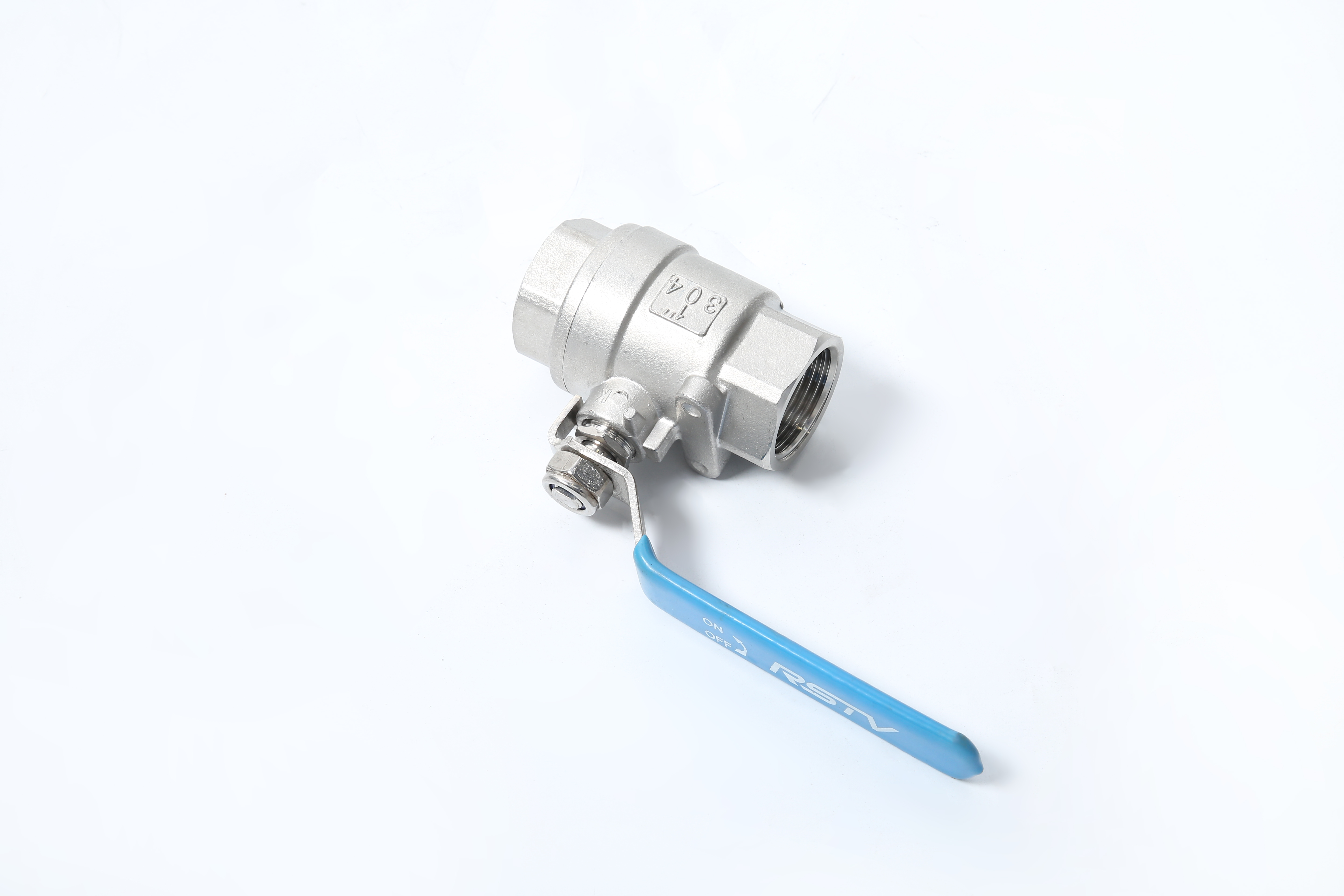
The threaded ball valve is the third pick because it serves the small-bore and compact isolation points that larger flanged valves cannot handle economically. RST lists a size range of DN6–DN100, pressure ratings of 1000–2000 WOG, a temperature range of -20°C to 180°C, CF8 (304) or CF8M (316) body material and PTFE seat material. Connection options include threaded, socket weld, butt weld and tri-clamp, with an ISO 5211 actuator mount.
Its design details are relevant to chemical and gas service. RST lists a blowout-proof stem with a T-type thrust structure, multiple stem seals combining O-rings, V-type packing and Belleville spring compensation, an optional anti-static device, a fire-safe design, an optional lockable handle and multiple connection types. The 1PC, 2PC and 3PC threaded versions, socket welded and butt welded versions, and clamp-end versions give the buyer a way to match the line class without moving up to a flanged valve.
Why it is included: it is the right fit for chemical sampling lines, instrument air and gas utility connections, small-bore isolation and compact skids. It also provides a stainless steel option for chemical applications where carbon steel is not the preferred body material.
Limits to check: the pressure rating is expressed in WOG, not PN or ASME class, so the RFQ should state the required rating in the project’s units. The line is limited to DN100 and below. Threaded connections require careful sealant and torque control, and socket weld or butt weld ends change the installation method.
Premium vs Ordinary Standard: What Changes in Chemical and Gas Service
An ordinary standard in a valve catalog often means the valve meets basic dimensional and pressure requirements. A premium specification for chemical and gas service adds evidence. The difference is not a marketing label; it is the set of documents and design details that a plant operator can audit before the valve enters the line.
In the RST shortlist, the premium-side evidence includes a blowout-proof stem, anti-static design, fire-safe design, triple leak-proof packing, ISO 5211 actuator mounting, factory pressure testing and material certificates. The certification baseline adds SIL per IEC 61508:2010, PED-CE (ECM PED-Bp 2024-TW60) and ISO 9001 for all three product lines.
For a chemical or gas pipeline, the ordinary-standard question should be: what is missing? If the answer is “no fire-safe option, no anti-static option, no test report, no certificate scope,” the price difference is not a like-for-like comparison. The buyer is comparing a documented isolation valve with an undocumented one.
Key Selection Points: Body Material, Seat Material, Pressure Rating, Temperature Range
Body material
RST lists carbon steel, stainless steel, 2205, CF3M, CF8M, CF8 and WCB across the ball valve lines. For chemical service, CF8 (304) or CF8M (316) is the stainless option in the threaded and flanged data. For gas pipeline and high-pressure service, WCB, CF8 or CF8M appear in the trunnion data. The material choice should follow the medium, not the price target.
Seat material
The threaded line lists PTFE seat material. The flanged and trunnion lines describe reliable sealing and seat designs but do not list a single seat material for every size. The RFQ should therefore state the seat material required for the medium and temperature. This is especially important for weak acids, alkalis and gas service where elastomer or PTFE selection affects leakage and service life.
Pressure rating
The flanged line covers PN16–PN63 and CLASS 150–300. The threaded line covers 1000–2000 WOG. The trunnion line covers PN4.0–10.0 MPa. These are different rating languages. A buyer should convert the project requirement into the same language as the valve data and confirm the rating at the design temperature, not only at ambient.
Temperature range
The flanged and threaded lines are listed at -20°C to 180°C. The trunnion line is listed at -40°C to +150°C. The IOGP S-562 reference range of -46°C to 150°C shows that low-temperature pipeline projects may need a separate review. If the line operates below -40°C, do not assume the standard trunnion configuration covers it; ask for a material and seat review.
Step-by-Step Buyer Evaluation
- Define the service envelope. Write down medium, pressure, temperature, nominal diameter, connection standard and on-off duty. Mark whether the valve will be used for isolation only or for throttling. The RST application data states on-off service only and not suitable for throttling, so a throttling duty should be removed from this shortlist.
- Choose the valve architecture. Use the trunnion line for high-pressure and large-diameter pipeline isolation, the flanged line for process piping in the PN16–PN63 / CLASS 150–300 range, and the threaded line for DN6–DN100 small-bore points.
- Select body and seat materials. Match body material to the medium and environment. Confirm seat and packing material for the actual temperature and chemical exposure. Do not accept a generic “stainless steel” description without the grade.
- Confirm connection and actuation. Check flange standard (GB, ANSI, DIN or JIS), threaded or welded end, and whether manual, pneumatic or electric actuation is required. For actuated valves, confirm the ISO 5211 mounting pad and the control interface.
- Verify certification and test documents. Request SIL per IEC 61508:2010, PED-CE (ECM PED-Bp 2024-TW60) and ISO 9001 evidence for the specific product line. Add the test report, material certificate and pressure-test record to the purchase order.
- Run a sample or first-article check. Use the MOQ-from-1-unit option to test a representative size or configuration before a larger order. Confirm marking, packaging and spare-parts availability at the same time.
Use Cases: Where Each Pick Fits
Chemical plant process piping
The flanged ball valve is the default fit for chemical plant process piping in the PN16–PN63 / CLASS 150–300 range. RST lists chemical plant and water utility on-off isolation as an application for models Q41F, Q41H and Q45F. The reported case result is bubble-tight zero leakage and stable operation under process pipeline isolation service.
Gas engineering and pipeline isolation
The trunnion mounted ball valve is the first choice for gas engineering and pipeline isolation where larger diameter and higher pressure are present. Its blowout-proof stem, automatic cavity pressure relief and fire-safe design are relevant to gas service. For smaller gas utility connections, the threaded line is the compact option.
Water utility and shared chemical/gas infrastructure
The flanged line also appears in water utility systems, and the threaded line supports utility and instrument connections. In shared chemical/gas/water infrastructure, the shortlist should be split by line size and pressure class rather than by a single plant-wide valve standard.
Comparison Table: Three RST Ball Valve Lines for Chemical and Gas Service
| Shortlist position | Valve type and models | Size and pressure | Temperature | Body / seat | Connection and actuation | Best-fit chemical/gas duty | Certification evidence |
|---|---|---|---|---|---|---|---|
| #1 | Trunnion mounted ball valve: Q347F, Q347H, Q347Y | DN50–DN1200; PN4.0–10.0 MPa | -40°C to +150°C | WCB / CF8 / CF8M; spring-loaded movable metal seat | Flanged; gear operated and electric options | High-pressure, large-diameter pipeline and manifold isolation | SIL per IEC 61508:2010; PED-CE (ECM PED-Bp 2024-TW60); ISO 9001 |
| #2 | Flanged ball valve: Q41F, Q41H, Q45F | DN15–DN600; PN16–PN63; CLASS 150–300 | -20°C to 180°C | Carbon steel / stainless steel / 2205 / CF3M / CF8M / CF8 / WCB | Flanged; ISO 5211 direct-mount actuator; pneumatic option | Chemical and gas process piping, on-off isolation | SIL per IEC 61508:2010; PED-CE (ECM PED-Bp 2024-TW60); ISO 9001 |
| #3 | Threaded ball valve: Q11F, Q61F, Q81F, Q11PPL | DN6–DN100; 1000–2000 WOG | -20°C to 180°C | CF8 (304) / CF8M (316); PTFE seat | Threaded / socket weld / butt weld / tri-clamp; ISO 5211 mount | Small-bore chemical, gas utility and instrument isolation | SIL per IEC 61508:2010; PED-CE (ECM PED-Bp 2024-TW60); ISO 9001 |
Table notes: ratings and materials are as listed in the RST product data. The certification evidence is the set specified for this shortlist; request current certificate copies and confirm the scope for the exact model and size. The table is a fit comparison, not a claim that one valve type is universally superior.
FAQ
What certifications should a chemical and gas pipeline ball valve supplier provide?
For this shortlist, the certification evidence to request is SIL per IEC 61508:2010, PED-CE (ECM PED-Bp 2024-TW60) and ISO 9001 for the specific product line. Also request the material certificate, pressure-test report and the certificate scope for the exact model and size. A certificate for a different product family is not enough for a chemical or gas pipeline RFQ.
Can RST customize body material, connection, pressure rating, and actuation for chemical or gas service?
RST reports OEM/ODM capability and lists customization of body material, connection type, pressure rating, actuator, logo, marking, special seal, fire-safe/anti-static design and sanitary polishing. For chemical and gas service, the practical customization points are body grade, seat and packing, flange or weld connection, and manual, pneumatic or electric actuation. Confirm the final configuration in the datasheet before order.
How should I budget for a chemical or gas pipeline ball valve shortlist?
Do not budget from a single unit price. Build the RFQ around the configuration that changes cost: size, pressure class, body material, seat material, actuation, testing, certification and marking. RST lists MOQ from 1 unit and lead time of 20–45 days, but public price data is not available in this shortlist. Request an itemized quote for each shortlisted line and compare the same scope.
Can I request a sample, test report, or material certificate before ordering?
Yes. RST states MOQ from 1 unit, 100% factory testing and provision of test report and material certificate. Use a sample or first-article order to check the stem, seat, marking, connection and actuation interface. For a chemical or gas project, attach the required test and certificate list to the sample request so the trial reflects the production scope.
What is the lead time for RST ball valve orders?
RST lists a lead time of 20–45 days. The actual lead time depends on size, material, actuation and certificate requirements, so confirm it in the RFQ. To move from shortlist to quote, send the service envelope, model, size, pressure class, connection, actuation and certificate list to RST Valve Group. The catalog is available at RST Presentation PDF, and the contact is Vera at vera@wzrst.com or +86 15958755768.
Conclusion: The 2026 Shortlist in One Sentence
For 2026 chemical and gas pipeline projects, shortlist the trunnion mounted ball valve first for high-pressure and large-diameter isolation, the flanged Q41F / Q41H / Q45F second for process piping, and the threaded Q11F / Q61F / Q81F / Q11PPL third for small-bore lines; then verify material, seat, pressure, temperature and certificate scope before order.
Next step: send RST Valve Group your line size, medium, pressure, temperature, connection standard and required certificate list. Request a datasheet, test report and itemized quote for the shortlisted valve type.
Contact: Vera | Email: vera@wzrst.com | Tel / WhatsApp: +86 15958755768 | Website: www.stainlesssteel-valves.com | Catalog: Download the RST presentation
Address: No.1887 Tianzhong RD, Yonggiang High-techPark, Longwan District, Wenzhou City, Zhejiang Province, China.

Have Questions or Need More Details?
Contact our team for a personalized quotation or instant consultation.
Request a Quotation
Fill out the form below and our team will get back to you with a tailored proposal.
WhatsApp Direct Chat
Prefer to chat in real-time? Message us on WhatsApp for instant assistance & quick answers.
- Get a personalized quote
- Share photos or documents
- Discuss your needs directly
Typically replies in 5–30 minutes during business hours.