
Flanged vs Threaded vs Trunnion Mounted Ball Valve: Buyer Comparison Guide
Choosing between a flanged, a threaded and a trunnion mounted ball valve is not a cosmetic decision. The three designs differ in how the valve joins the pipeline, how much pressure and bore size they can carry, how they are actuated and serviced, and which certifications they need to satisfy before a project will accept them. This guide compares the three families side by side using real product data from RST VALVE GROUP CO.,LTD, a Wenzhou-based industrial valve manufacturer founded in 2009, so that buyers in the evaluation and execution stages can move from shortlist to purchase order with fewer assumptions.
Problem Definition: What Buyers Actually Need to Decide
A ball valve comparison is really three decisions stacked on top of each other. The first is connection type — bolted flange, threaded / welded end, or a flanged trunnion design. The second is pressure and size envelope, because a connection that works at DN25 and 1000 WOG behaves very differently from one that must hold PN10.0 MPa at DN1200. The third is documentation and certification coverage, because a valve that cannot produce a material certificate, a pressure test report or a recognised functional safety certificate will be rejected at the inspection stage regardless of how well it performs.
Buyers commonly get into difficulty when these three decisions are treated separately. A specification may list a size and a pressure class but leave the connection standard open, or it may fix the connection while ignoring whether the chosen family is actually covered by the supplier's PED-CE or SIL scope. The result is either an over-specified valve that costs more than the line requires, or an under-specified valve that fails acceptance.
Practical rule: confirm medium, working pressure, working temperature, nominal diameter and connection type before selecting valve body material and seat sealing material. In most RST Valve procurement conversations, matching body and seat material to the pipeline medium is the step that removes the largest source of rework.
Industry Background: The Standards Behind the Comparison
Three families of publicly documented requirements shape how ball valves are specified internationally.
API Specification 6D defines the requirements for the design, manufacturing, assembly, testing, and documentation of ball, check, gate, and plug valves used in pipeline and piping systems for the petroleum and natural gas industries. The identified edition applies to pressure classes 150, 300, 400, 600, 900, 1500, and 2500. The 25th Edition Addendum 2 extends the described scope to include design, manufacturing, materials, welding, quality control, assembly, testing, marking, documentation, and process controls, and its stated coverage includes hydrogen gas service as well as petroleum and natural gas.
IOGP S-562 Version 3.1 is a supplementary procurement specification for manually operated ball valves used together with API Specification 6D, 25th Edition. Its published excerpt states an allowable operating temperature range of –50 °F (–46 °C) to 302 °F (150 °C). That range belongs to the specific oil-and-gas procurement context and should not be read as a universal temperature rating for every ball valve on the market.
Alongside these, European market access depends on PED-CE conformity, and safety-related process isolation increasingly depends on SIL capability assessed against IEC 61508. For buyers, the practical takeaway is that connection type, size, pressure class, material and certification are not separate line items — they are one decision, and they should be evaluated together.
Detailed Solution: How the Three Ball Valve Families Compare
Flanged Ball Valves — Models Q41F, Q41H, Q45F
RST Valve's flanged ball valve family covers the model designations Q41F, Q41H and Q45F, and includes 2PC direct mounting pad flanged ball valves, 3PC direct mounting pad flanged ball valves, wafer type flanged ball valves and 1PC flanged ball valves. The published specification for this family states a full port range of DN15–DN600 and a working temperature range of -20°C to 180°C, with bodies produced by investment casting. Body materials available across the family include carbon steel, stainless steel, 2205 duplex, CF3M, CF8M, CF8 and WCB.
The direct mounting pad configuration matters at the execution stage. It allows an actuator to be bolted directly to the valve without a separate bracket and coupling, which shortens assembly time and reduces the tolerance stack between the valve stem and the actuator. Flanged ends also make the valve removable from a line without cutting pipe, which suits maintenance strategies built around planned shutdowns rather than online replacement.
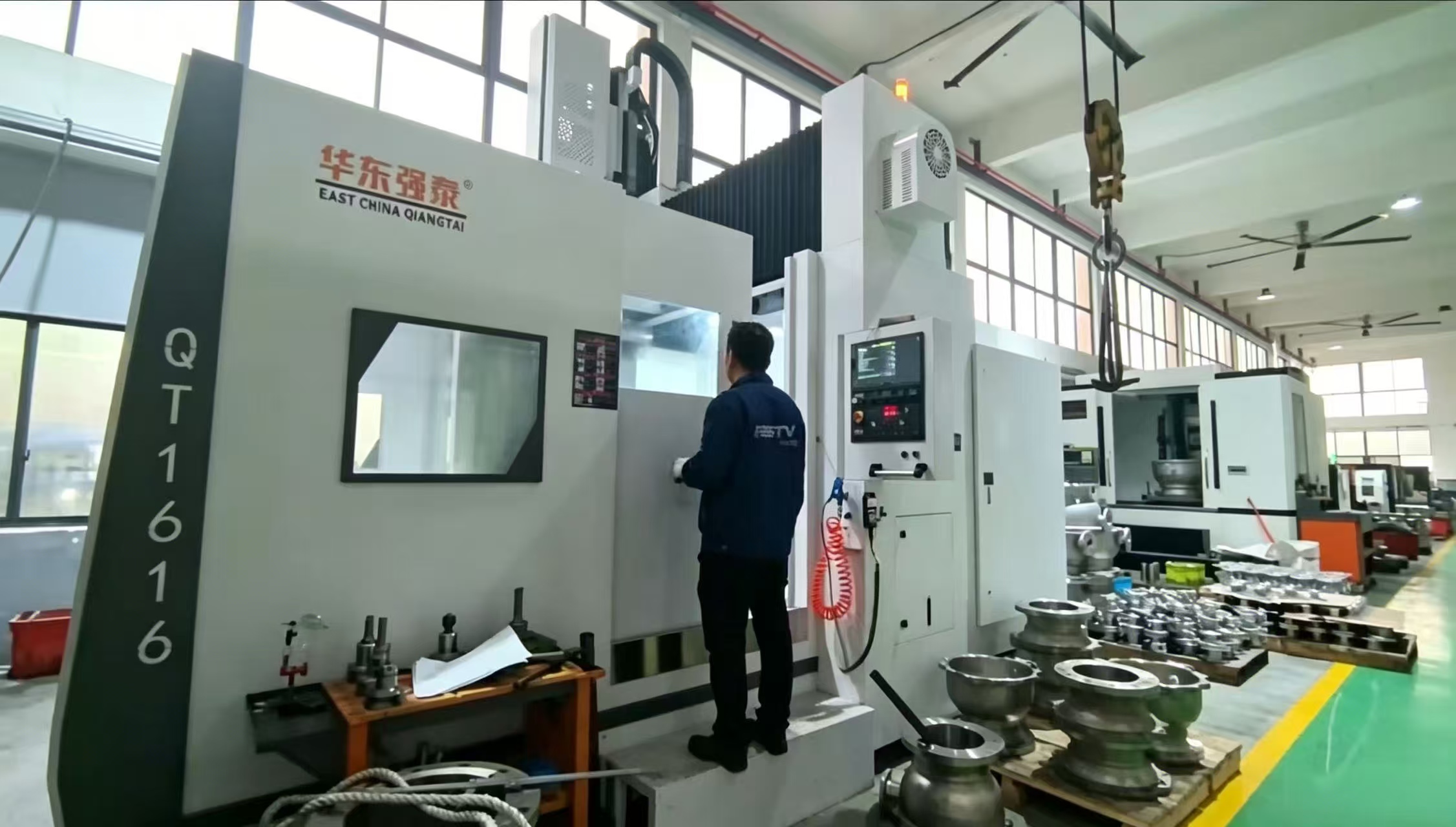
In-house CNC machining of flanged ball valve components at the RST Valve factory.
Threaded Ball Valves — Models Q11F, Q61F, Q81F, Q11PPL
The threaded family is designated Q11F, Q61F, Q81F and Q11PPL. Within it, RST Valve lists 2PC threaded, 3PC threaded and 1PC threaded ball valves, plus 2PC socket welded, 3PC socket welded and 3PC butt welded ball valves, a 1PC hex threaded ball valve, and 1PC and 2PC threaded direct mounting pad ball valves.
Published parameters for the threaded range are a size range of DN6–DN100, a pressure rating of 1000–2000 WOG, a temperature range of -20°C to 180°C, body material of CF8 (304) or CF8M (316), and PTFE seating. Connection options cover threaded, socket weld, butt weld and tri-clamp ends, and the actuator mount follows ISO 5211.
This is the family to reach for when the line is small, when welding or threading on site is cheaper than fabricating flanged spools, and when a compact installed footprint matters. Two limitations are worth stating plainly: the size ceiling is DN100, and the pressure rating is expressed in WOG rather than in the PN or Class scales used for high-pressure process lines. A threaded valve is therefore a poor fit for a large-bore, high-pressure hydrocarbon header, and a good fit for utility, instrument and small process branches.
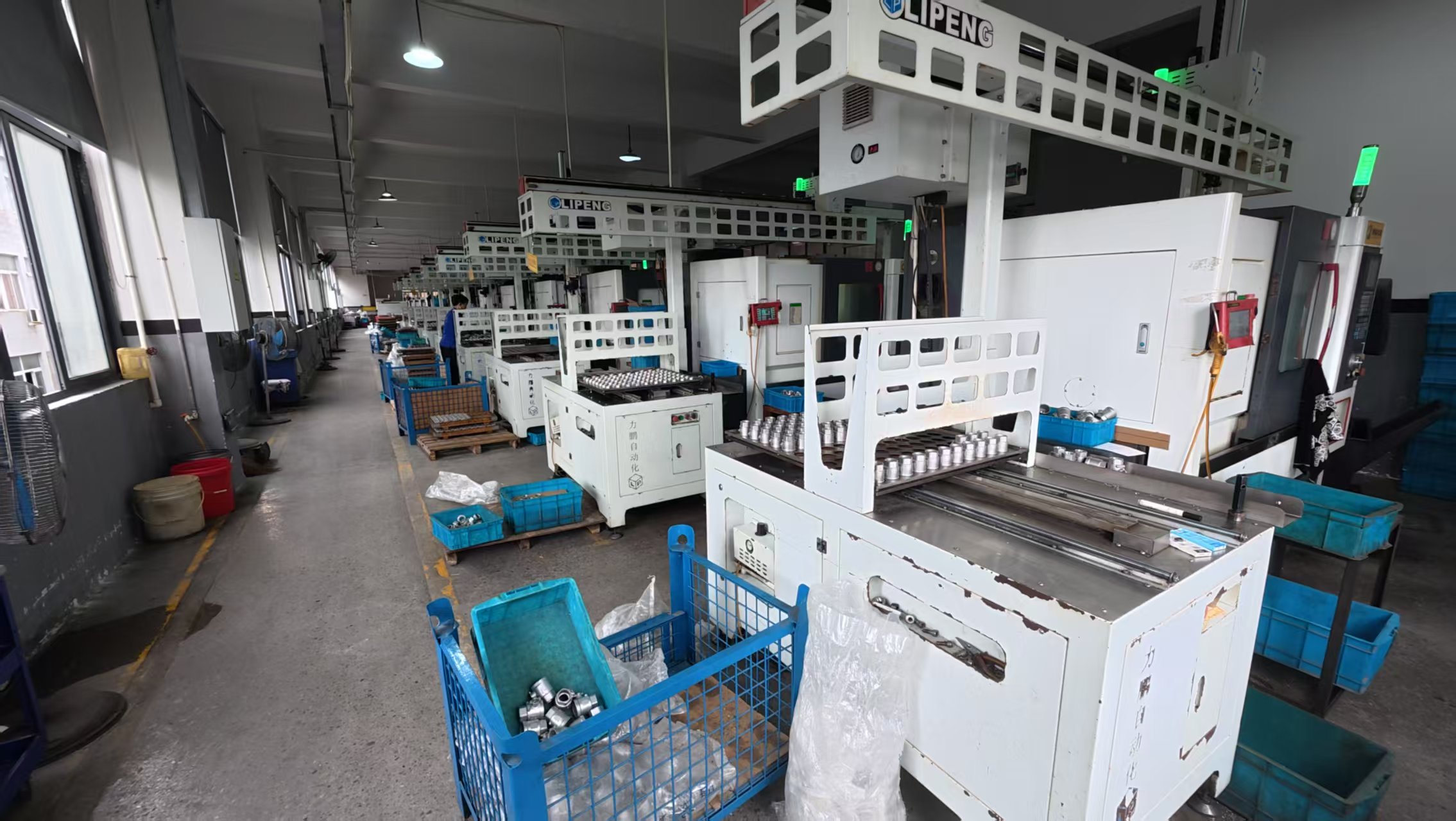
Dedicated CNC capacity for threaded ball valve bodies and end connections.
Trunnion Mounted Ball Valves — Models Q347F, Q347H, Q347Y
The trunnion mounted family uses the designations Q347F, Q347H and Q347Y and includes 2PC trunnion mounted ball valves, gear operated trunnion mounted ball valves and electric trunnion mounted ball valves. Published parameters are a nominal pressure range of PN4.0–10.0 MPa, a nominal diameter range of DN50–DN1200, an applicable temperature range of -40°C to +150°C, flanged connection, and body materials of WCB, CF8, CF8M and similar grades.
The trunnion design is the only one of the three families in this comparison that reaches DN1200, and its pressure range is expressed in MPa rather than WOG. The wider temperature window (-40°C to +150°C) also makes it the more suitable choice where ambient or process conditions fall outside the -20°C to 180°C band shared by the flanged and threaded families — particularly on the cold end. Gear and electric actuation options are part of the standard family rather than a special build, which matters when a project specifies remote or automated operation from the outset.
Certification Coverage Across All Three Families
Certification is where a comparison guide is most useful, because the three families share a single certification footprint at RST Valve rather than carrying different scopes.
- ISO 9001:2015 (GB/T 19001-2016), certificate number 20225Q21079R0M, issued by ZHEJIANG QUANPIN CERTIFICATION CO.,LTD., covering production and sales of metal valves and filters within the scope of the qualification license. Issued 2025-09-28, valid to 2028-09-27.
- ISO 14001:2015 (GB/T 24001-2016), certificate number 20225E20474R0M, same issuing body, covering production, sales and related management activities of metal valves and filters. Issued 2025-09-28, valid to 2028-09-27.
- ISO 45001:2018 (GB/T 45001-2020), certificate number 20225S20439R0M, same issuing body and scope. Issued 2025-09-28, valid to 2028-09-27.
- PED-CE, EU Production Type Certificate ECM PED-Bp 2024-TW60, issued by Ente Certificazione Macchine Srl, covering industrial valves DN15–DN1200, NPS1/2"–48", PN6–PN260, Class150–Class1500, including ball, gate, globe, check, butterfly, strainer and control valves. Reference standards include EN12266-1:2012, JB/T 7245-2017, EN 12516-1:2014+A1:2018 and EN 12284:2003. Issued 2024-06-27, valid to 2029-06-26.
- SIL, certificate No. 4I260528.RSTDO08, issued by Ente Certificazione Macchine Srl against IEC 61508:2010 Parts 1–7, covering industrial valves (gate, ball, globe, check and butterfly) across the Z, J, H, Q, D and ZJHM series. Issued 2026-05-28, valid to 2031-05-27.
All three product families — flanged Q41F/Q41H/Q45F, threaded Q11F/Q61F/Q81F/Q11PPL, and trunnion mounted Q347F/Q347H/Q347Y — appear in the related product lists of the PED-CE and SIL certificates and of the three ISO management system certificates. For a buyer building a bid comparison, that means one supplier file can cover the compliance section of all three valve types in a project, instead of three separate qualification packs.
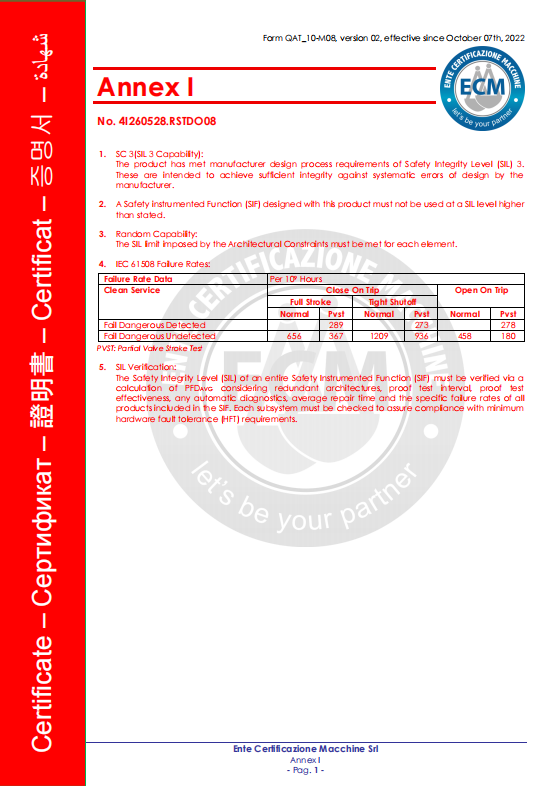
SIL functional safety certificate covering the Q series ball valve scope under IEC 61508:2010.
Step-by-Step Breakdown: How to Run the Comparison
- Fix the connection type against the pipeline, not against the catalogue. Flanged ends suit lines that will be dismantled for maintenance and lines above roughly DN50. Threaded and welded ends suit small-bore utility and instrument branches where fabricating flanged spools adds cost without adding value. Trunnion mounted flanged valves suit large-bore, higher-pressure process and pipeline isolation.
- Match nominal diameter to the available family. Threaded covers DN6–DN100, flanged covers DN15–DN600, and trunnion mounted covers DN50–DN1200. Overlap means more than one family can be technically valid, so the decision should then default to pressure, temperature and maintenance strategy.
- Match pressure and temperature to the published range. Threaded: 1000–2000 WOG, -20°C to 180°C. Flanged: -20°C to 180°C. Trunnion mounted: PN4.0–10.0 MPa, -40°C to +150°C. Where a project also cites API 6D, confirm that the pressure class requested (150, 300, 400, 600, 900, 1500 or 2500) is stated on the datasheet, because the standard's scope covers those classes specifically.
- Select body and seat materials against the medium. Flanged offers carbon steel, stainless steel, 2205, CF3M, CF8M, CF8 and WCB. Threaded uses CF8 (304) / CF8M (316) bodies with PTFE seats. Trunnion mounted uses WCB, CF8, CF8M and similar. Confirm chemical compatibility, not just corrosion category.
- Check the certification scope against the actual model. Ask for the certificate number and confirm the model designation appears in the related scope — for example, Q41F, Q41H and Q45F for flanged; Q11F, Q61F, Q81F and Q11PPL for threaded; Q347F, Q347H and Q347Y for trunnion mounted. A valid certificate that does not name the model is not a qualification.
- Decide actuation before ordering. Threaded valves use an ISO 5211 actuator mount. Flanged models offer direct mounting pads. Trunnion mounted models are available as gear operated and electric units. Settling this at the RFQ stage avoids a second engineering cycle.
- Confirm the test and documentation package. RST Valve's stated quality control covers shell strength test, seat leakage test, material inspection, visual inspection, 100% factory test, with a test report and material certificate provided. Pre-shipment pressure testing and witness inspection are stated as acceptance criteria in the purchasing terms.
- Validate with a sample or pilot order before scaling. With a stated MOQ of 1 unit, a pilot purchase is a practical step that removes specification risk at low cost.
Use Cases: Which Family Fits Which Application
Chemical, gas and water utility process isolation. RST Valve case records describe projects for chemical plants, water treatment contractors and gas engineering companies, typically 50–500 units per project, used for on-off isolation on process pipelines in chemical, gas and water utility systems. Reported outcomes in those records include bubble-tight zero leakage, stable operation and low maintenance cost, with quarter-turn fast switching and bi-directional sealing as the noted characteristics. The same case scope lists flanged, threaded and trunnion mounted models, which reflects the real pattern on such projects: threaded valves on small instrument and utility branches, flanged valves on mid-bore process lines, and trunnion mounted valves on larger, higher-pressure headers.
Petrochemical and refining lines. The applicable industry list for all three RST Valve families covers petrochemical industry, petroleum refining, liquid cooling, nuclear power, chemical industry, metallurgy, mining, medical industry, food industry, national defence, military and urban construction. Where the line is large bore and the pressure class is high, the trunnion mounted family is the one that reaches DN1200 and PN10.0 MPa.
Liquid cooling and packaged equipment. Both the flanged and threaded families list liquid cooling among their applicable industries. Packaged skids typically favour threaded or small flanged valves because the piping is prefabricated and the bore is modest; this is also where the ISO 5211 mount on threaded valves simplifies pneumatic or electric automation.
Food, pharmaceutical and sanitary service. The threaded family supports tri-clamp connection and the customisation list includes sanitary polishing, which allows the same阀 platform to be adapted to hygienic circuits.
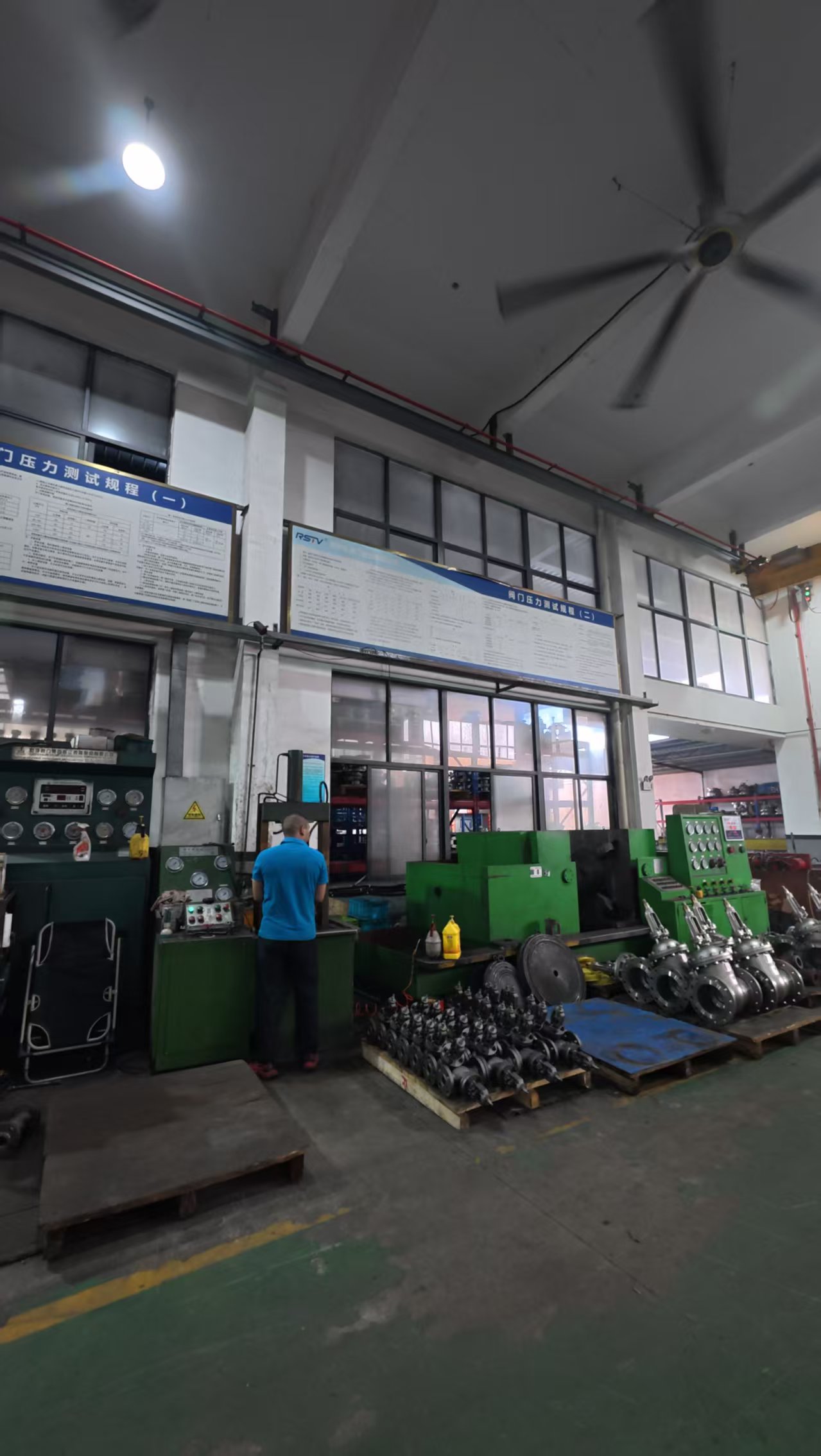
Shell strength and seat leakage testing form part of the 100% factory test routine.
Comparison Table: Flanged vs Threaded vs Trunnion Mounted
| Comparison dimension | Flanged ball valve | Threaded ball valve | Trunnion mounted ball valve |
|---|---|---|---|
| Model designations | Q41F, Q41H, Q45F | Q11F, Q61F, Q81F, Q11PPL | Q347F, Q347H, Q347Y |
| Connection type | Flanged | Threaded / socket weld / butt weld / tri-clamp | Flanged |
| Nominal diameter range | DN15–DN600 | DN6–DN100 | DN50–DN1200 |
| Pressure range | Not stated in the referenced data | 1000–2000 WOG | PN4.0–10.0 MPa |
| Working temperature | -20°C to 180°C | -20°C to 180°C | -40°C to +150°C |
| Body material options | Carbon steel / stainless steel / 2205 / CF3M / CF8M / CF8 / WCB | CF8 (304) / CF8M (316); carbon steel and SS304 / SS316 across the family | WCB / CF8 / CF8M and similar; carbon steel / SS304 / SS316 |
| Seat material | Not stated in the referenced data | PTFE | Not stated in the referenced data |
| Structure options | 2PC direct mounting pad, 3PC direct mounting pad, wafer type, 1PC | 2PC, 3PC, 1PC, socket welded, butt welded, hex threaded, direct mounting pad | 2PC, gear operated, electric |
| Actuator interface | Direct mounting pad | ISO 5211 | Gear operated / electric |
| ISO 9001 / ISO 14001 / ISO 45001 coverage | Listed in the related product scope | Listed in the related product scope | Listed in the related product scope |
| PED-CE coverage | Listed in the related product scope | Listed in the related product scope | Listed in the related product scope |
| SIL (IEC 61508:2010) coverage | Listed in the related product scope (Q series) | Listed in the related product scope (Q series) | Listed in the related product scope (Q series) |
Certificate coverage applies to the model designations named on the individual certificate. Buyers should confirm the current certificate and scope directly before awarding a purchase order.
OEM and Customisation Capability
For buyers evaluating a supplier rather than only a product, RST Valve's stated production model is OEM / ODM, with OEM production services and ODM design and production services both available. Customisation covers body material, connection type, pressure rating, actuator, logo, marking, special seal, fire-safe / anti-static design, and sanitary polishing. Custom pressure ratings and custom actuator integration are supported.
Manufacturing capability supporting this includes in-house CNC machining for ball valve components, with dedicated CNC machines for threaded ball valves and flanged ball valves, and machining equipment for threaded valves. Stated monthly capacity is 15,000 units, lead time is 20–45 days, and MOQ is 1 unit. The company reports a 20,000 square metre facility, 430 employees and an export share of 71%–80%, with products shipped to Africa, the Americas, Asia, the Caribbean, East Europe, Europe, the Middle East, North Europe, Oceania, West Europe and other markets. After-sales support covers remote technical support, spare parts supply, online troubleshooting, and on-site service available for large-scale projects.
FAQ
Do flanged, threaded and trunnion mounted ball valves share the same certification coverage?
Yes, within the RST Valve scope. The flanged models (Q41F, Q41H, Q45F), threaded models (Q11F, Q61F, Q81F, Q11PPL) and trunnion mounted models (Q347F, Q347H, Q347Y) are all listed in the related product scope of the ISO 9001, ISO 14001 and ISO 45001 certificates, the PED-CE certificate (ECM PED-Bp 2024-TW60), and the SIL certificate issued against IEC 61508:2010 Parts 1–7. That said, certification is model-specific — buyers should always check that the exact model designation appears on the current certificate before awarding an order.
Can RST Valve customise a trunnion mounted ball valve to a project specification?
RST Valve provides OEM and ODM production services and supports customisation of body material, connection type, pressure rating, actuator, logo, marking, special seal, fire-safe and anti-static design, and sanitary polishing. Custom pressure ratings and custom actuator integration are also supported. For the trunnion mounted family, published parameters are DN50–DN1200 at PN4.0–10.0 MPa with a -40°C to +150°C temperature range, so customisation requests should be checked against that baseline first.
What should buyers verify when screening China OEM trunnion mounted ball valve manufacturers?
Four things carry the most weight. First, model-level certification — confirm that the specific trunnion model appears in the manufacturer's PED-CE and SIL scopes, not just the general product category. Second, published parameters, including nominal pressure range, nominal diameter range, temperature range and body material options. Third, manufacturing evidence such as in-house CNC machining for ball valve components and documented shell strength and seat leakage testing. Fourth, a written test and documentation package — shell strength test, seat leakage test, material inspection, visual inspection, 100% factory test, with test report and material certificate supplied.
What are the MOQ, payment terms and acceptance criteria for a pilot order?
The stated MOQ is 1 unit, which makes a pilot or sample order practical before scaling. Stated delivery terms include FOB, CIF, DAP, DDP and EXW. Acceptance criteria are pre-shipment pressure testing with witness inspection available. Payment terms are 30% T/T advance with 70% T/T before shipment. Pilot orders are typically used to confirm medium compatibility, pressure and temperature performance, and the documentation package before a bulk award.
What lead time should buyers plan for, and how does a sample request start?
Stated lead time is 20–45 days, with monthly capacity of 15,000 units. To start, send the required specifications — nominal diameter, working pressure, working temperature, medium type, connection type, and required certification — and request a sample or quotation. RST Valve's stated contact route is vera@wzrst.com or WhatsApp / Tel +86 15958755768, and the full product presentation can be downloaded from the catalogue link below.
Conclusion: Choose the Connection, Then Prove the File
The three families do not compete on prestige — they compete on fit. Threaded ball valves (Q11F, Q61F, Q81F, Q11PPL) cover DN6–DN100 at 1000–2000 WOG and are the efficient choice for compact, lower-pressure utility and instrument lines. Flanged ball valves (Q41F, Q41H, Q45F) cover DN15–DN600 with a broad material list and direct mounting pads, which makes them the workhorse for mid-bore process isolation. Trunnion mounted ball valves (Q347F, Q347H, Q347Y) reach DN50–DN1200 at PN4.0–10.0 MPa and -40°C to +150°C, and are the only family here that covers large-bore, higher-pressure service.
What separates a smooth project from a stalled one is the paperwork. Because all three families sit inside the same ISO 9001, ISO 14001, ISO 45001, PED-CE and SIL (IEC 61508:2010) footprint at RST VALVE GROUP CO.,LTD, a buyer can qualify one supplier file across an entire valve schedule rather than assembling three. Confirm the model on the certificate, confirm the parameters in writing, and validate with a pilot order before committing to volume.
Next Step: Sample, Quotation and Catalogue
Send your valve schedule — nominal diameter, working pressure, working temperature, medium, connection type and required certification — and RST Valve will return a configuration recommendation and quotation. Samples and pilot orders are accepted from 1 unit, with a stated lead time of 20–45 days.
Contact: Vera — vera@wzrst.com — Tel / WhatsApp: +86 15958755768
Website: www.stainlesssteel-valves.com
Full product presentation (PDF): Download the RST Valve Group catalogue
Address: No.1887 Tianzhong RD, Yongqiang High-tech Park, Longwan District, Wenzhou City, Zhejiang Province, China.
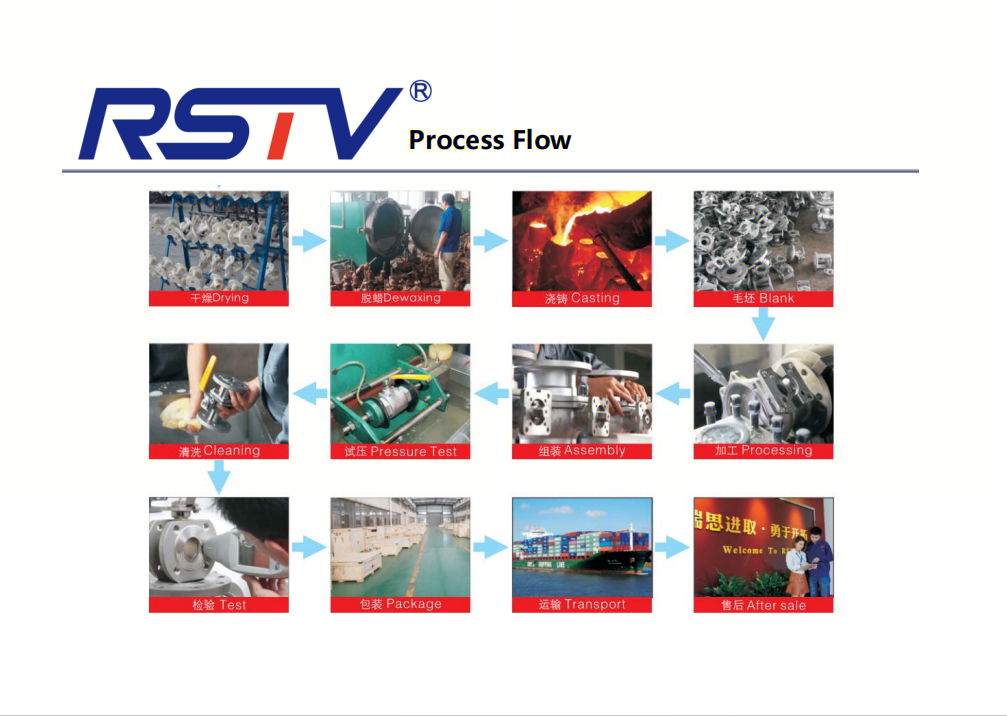
From raw material inspection through machining, assembly and 100% factory pressure testing.
Have Questions or Need More Details?
Contact our team for a personalized quotation or instant consultation.
Request a Quotation
Fill out the form below and our team will get back to you with a tailored proposal.
WhatsApp Direct Chat
Prefer to chat in real-time? Message us on WhatsApp for instant assistance & quick answers.
- Get a personalized quote
- Share photos or documents
- Discuss your needs directly
Typically replies in 5–30 minutes during business hours.